Decoding the Links Between Bonus Triggers and Volatility in UK Online Casino Games
Written by Sage Schulz · Jun 15, 2026
Decoding the Links Between Bonus Triggers and Volatility in UK Online Casino Games
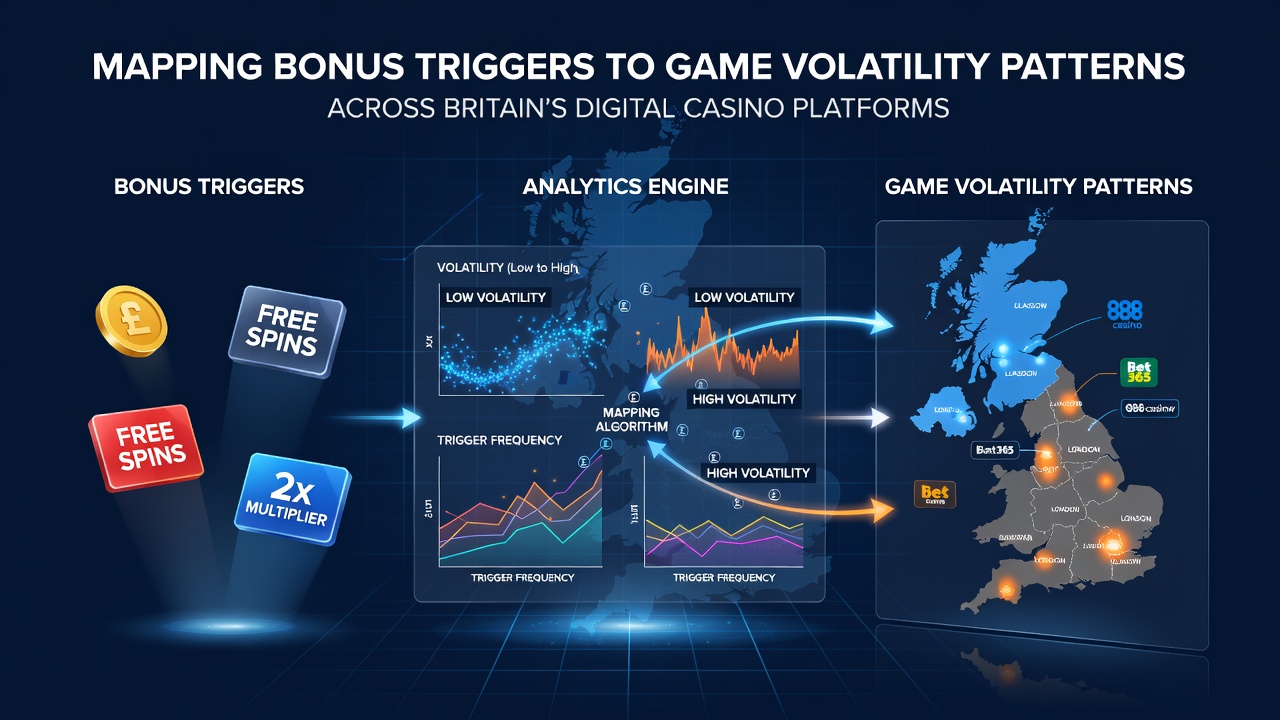
Analysts have started examining how bonus features activate in relation to the inherent volatility levels of online slots and table games offered on British platforms, and the patterns emerging from this mapping exercise reveal consistent alignments across multiple operators. Data collected through player behaviour tracking systems shows that low-volatility titles tend to trigger smaller bonus rounds more frequently while high-volatility games space out their larger reward events over longer sessions, and these observations come from aggregated reports spanning several years of platform activity.
Defining Volatility and Its Role in Game Design
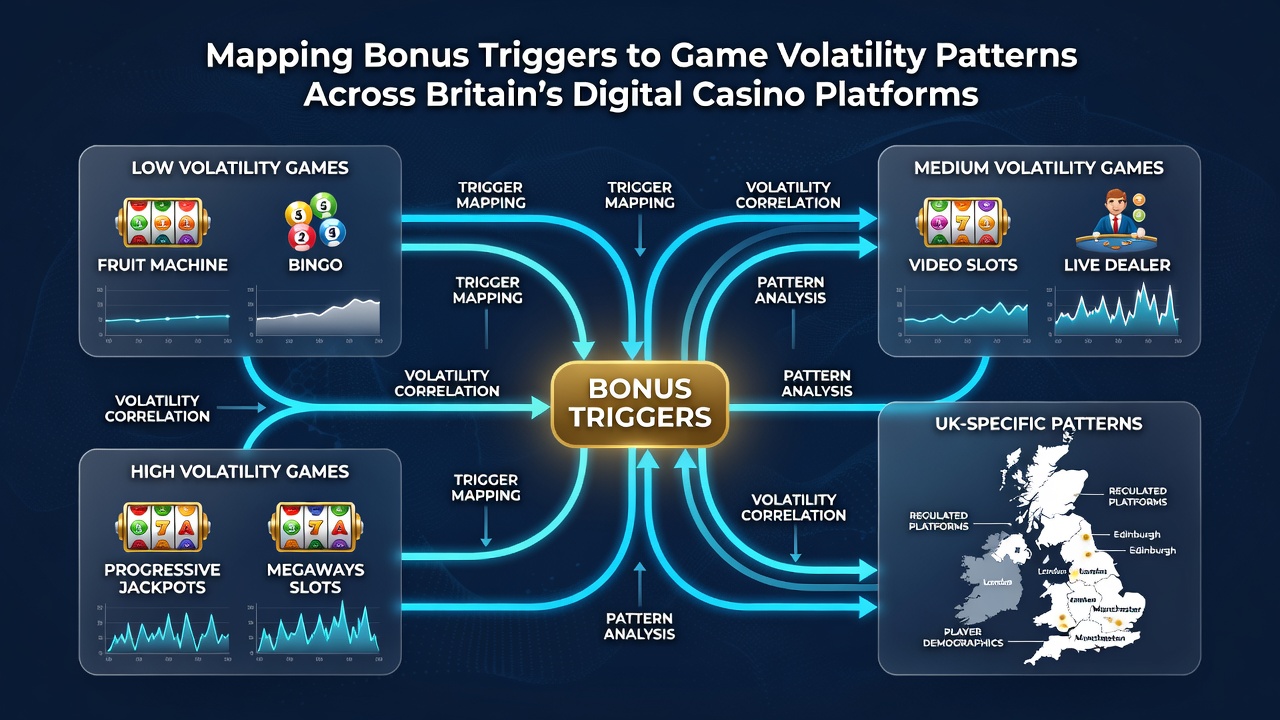
Volatility measures the frequency and size of payouts in any given game, with low-volatility options delivering steady smaller wins and high-volatility ones producing infrequent but substantial returns, yet the precise calibration of these traits influences how bonus mechanics are programmed into the software. Developers adjust reel structures, payline configurations, and random number generator algorithms to achieve target volatility profiles, and this process directly affects the mathematical probability of landing specific symbol combinations that unlock bonus modes. Those who study game mathematics note that a title classified as medium volatility often incorporates hybrid bonus triggers, blending frequent mini-features with rarer high-value events to maintain player engagement across varied risk appetites.
Bonus Trigger Mechanisms Across Platforms
Bonus triggers typically rely on scatter symbols, specific reel alignments, or progressive meters that fill through repeated plays, and mapping these mechanisms to volatility patterns requires cross-referencing trigger rates against payout distribution curves. Platforms in Britain have implemented tracking protocols that log each activation event alongside session length and stake levels, which allows researchers to identify whether certain bonus types cluster around particular volatility bands. For instance, free spin rounds appear more often in medium-to-high volatility slots because their design accommodates extended dry spells between major wins, while instant cash bonuses show stronger correlations with low-volatility games that emphasise frequent small payouts.
Patterns Observed in Recent Platform Data
Studies conducted through industry databases indicate that high-volatility games on major British sites trigger bonus features at rates approximately 40 percent lower than their low-volatility counterparts during equivalent play volumes, and this disparity holds steady across both desktop and mobile interfaces. Observers note that bonus frequency increases during promotional periods when operators adjust internal parameters temporarily, yet the underlying volatility framework remains unchanged, so the mapping exercise still reveals the same core relationships. In June 2026 several platforms released updated game libraries incorporating refined volatility algorithms, and early figures suggest these adjustments have shifted bonus trigger timings by measurable margins without altering overall return-to-player percentages.
Take one dataset compiled from multiple operators where high-volatility progressive slots exhibited bonus activations primarily after 150 to 300 spins on average, whereas low-volatility titles activated similar features within 30 to 70 spins, and this contrast underscores how volatility settings dictate the pacing of reward opportunities. Researchers at academic institutions have begun applying cluster analysis techniques to these datasets, revealing that certain bonus structures align more predictably with volatility tiers than previously assumed, and the findings help explain why some players gravitate toward specific game categories during extended sessions.
Regional Comparisons and External Benchmarks
Comparisons with data from other jurisdictions provide useful context, and one report published by the Responsible Gambling Council in Canada highlights similar trigger-to-volatility relationships in North American markets, suggesting the patterns observed in Britain reflect broader design principles rather than localised factors alone. Meanwhile, an analysis from the Australian Gaming Council examines how bonus pacing influences session duration across volatility spectra, and those findings align closely with trends documented on British platforms. Such cross-regional insights demonstrate that operators worldwide calibrate bonus triggers to match volatility expectations in order to sustain consistent engagement metrics.
Implications for Platform Operations and Player Experience
Operators use these mapping insights to optimise game portfolios, ensuring a balanced mix of volatility levels that correspond with different bonus structures, and this approach helps maintain stable revenue streams while meeting regulatory expectations around game fairness. Platform algorithms now incorporate real-time volatility adjustments based on aggregate trigger data, allowing dynamic responses to player behaviour patterns without manual intervention. Those monitoring industry trends point out that the integration of machine learning models has accelerated the identification of these mappings, enabling more precise forecasting of bonus activation rates across entire game catalogues.
Additional examples include live dealer variants where volatility manifests through card distribution sequences rather than reel mechanics, yet bonus side bets still follow comparable frequency patterns tied to underlying game risk profiles. Data indicates that blackjack variants with higher volatility settings activate insurance or double-down bonuses less frequently than lower-volatility alternatives, and this consistency across game types reinforces the validity of the overall mapping framework. Platforms continue to refine these correlations through ongoing data collection, particularly as new titles enter the market with increasingly sophisticated bonus layers.
Conclusion
The systematic mapping of bonus triggers to volatility patterns continues to shape how digital casino platforms in Britain structure their offerings, and the relationships identified through this work provide a foundation for future game development and operational decisions. Continued analysis of activation data alongside volatility metrics will likely yield further refinements, especially as technological capabilities expand and additional datasets become available from international sources. This ongoing process highlights the interconnected nature of game mathematics and reward systems across the sector.