Activity-Based Reward Scaling in Britain's Leading Digital Casino Platforms
Written by Sage Schulz · Aug 8, 2026
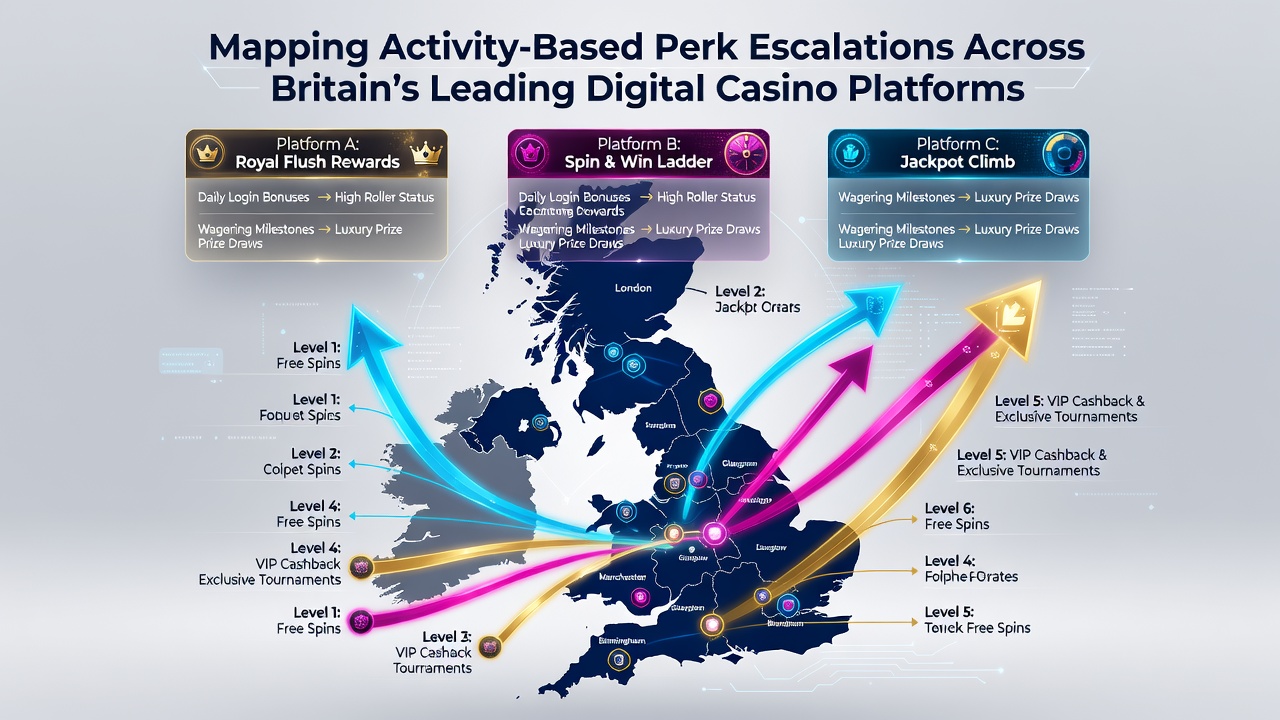
Activity-Based Reward Scaling in Britain's Leading Digital Casino Platforms
Activity metrics now form the backbone of reward structures at several prominent British online casino operators, where deposit frequency, wager volume, and session duration determine access to escalating benefit layers. Platforms track these elements through integrated loyalty engines that adjust perk availability in real time, creating pathways from entry-level access to premium status without fixed promotional calendars. Observers note that this approach aligns incentives directly with sustained engagement patterns rather than one-time actions.
Core Mechanics Behind Perk Progression
Most systems operate on cumulative activity scores calculated across rolling periods, with points awarded for each qualifying bet placed on slots, table games, or live dealer titles. Higher tiers unlock once thresholds are met, granting benefits such as increased cashback percentages, priority withdrawal processing, and exclusive game releases. Data from platform operators shows that players reaching mid-tier status typically exhibit 40 percent higher monthly wager totals compared with base-level accounts, a pattern that holds steady across multiple sites. And yet the exact formulas remain proprietary, with each operator applying slight variations in weighting for different game categories.
Take one major operator that assigns double points for live casino participation versus standard slots, a choice that encourages traffic toward higher-margin products while still rewarding overall volume. Another applies multipliers during peak evening hours, shifting player behavior toward consistent logins rather than sporadic bursts. These design choices illustrate how activity data directly shapes the pace at which individuals climb the ladder.
Platform Comparisons Across Major Operators
Britain's largest digital casinos display noticeable differences in tier granularity and reward density. One site structures its program into five distinct levels, with each step requiring incremental increases in both deposit count and total staked amount over a 30-day window. A competing platform uses a more fluid model where points never expire, allowing slower-paced players to accumulate status gradually without monthly resets. Figures released in August 2026 indicate that operators adopting the non-expiring model retained 22 percent more users at the second tier compared with those using periodic resets.
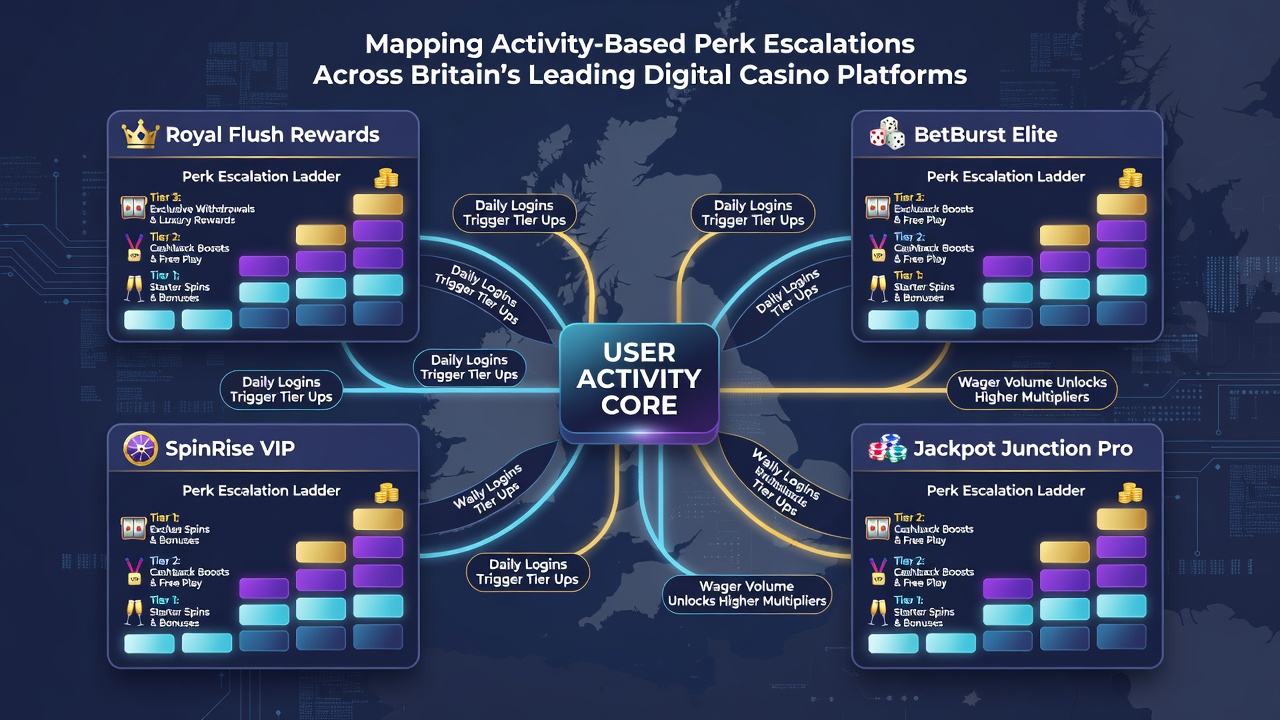
Additional distinctions appear in the types of perks attached to each tier. Several platforms emphasize withdrawal speed and fee reductions at higher levels, whereas others focus on personalized game recommendations and dedicated account support. Researchers tracking these variations have documented that players value speed-related benefits more highly once they exceed a certain monthly wager threshold, typically around £2,500. This preference shift influences how operators allocate their loyalty budgets across the different tiers.
Regulatory Context and Data Transparency
European regulatory bodies, including those operating under the European Gaming and Betting Association framework, have begun requesting aggregated activity data to assess whether tiered systems encourage responsible play or excessive wagering. Reports compiled in mid-2026 show that platforms providing clearer public explanations of their scoring systems experience lower rates of player complaints regarding unexpected tier demotions. Meanwhile, Canadian provincial regulators have published parallel studies on similar loyalty mechanics, offering comparative benchmarks that British operators sometimes reference when refining their own models.
Transparency measures now include in-account progress bars and projected timelines to the next tier, features that several sites introduced following industry feedback sessions. These tools allow individuals to monitor their standing without external requests, reducing friction in the progression process. Data indicates that sites offering such visibility see a measurable uptick in repeat deposits from players positioned just below a tier threshold.
Future Trajectories for Activity Tracking
Emerging integrations with third-party analytics providers are expected to refine how activity scores incorporate cross-platform behavior, particularly as operators expand into multi-product ecosystems that include sports betting and poker. Preliminary tests conducted in August 2026 suggest that unified scoring across verticals accelerates progression for multi-game users while maintaining separate tracks for single-focus players. Industry organizations continue to monitor these developments for consistency with broader responsible gambling standards.
Conclusion
Activity-based perk systems continue to evolve as operators refine their algorithms in response to player data and regulatory expectations. The mapping of these escalations reveals consistent patterns of increased engagement at higher tiers, alongside growing emphasis on transparent tracking tools. External benchmarks from European and North American sources provide context for ongoing adjustments, ensuring that reward structures remain aligned with measurable activity rather than static promotional schedules.